⚡ Quick Answer
A healthy lifestyle's benefits fall into three buckets: physical (lower disease risk, better weight management, more consistent energy), mental (improved mood, sharper focus, better stress resilience), and long-term (longer life expectancy and more years of good quality of life within it). None of these require a dramatic overhaul — they come from a handful of ordinary habits, done consistently, over months rather than days.
📋 What's in this guide
What Actually Counts as a "Healthy Lifestyle"?
Strip away the marketing around it, and a healthy lifestyle really comes down to a short list of fundamentals repeated consistently: reasonably balanced nutrition, regular movement, adequate sleep, some form of stress management, staying hydrated, and avoiding the habits with clear, well-documented harm — smoking chief among them, excessive alcohol close behind.
None of that requires perfection, a gym membership, or an overhauled kitchen. The research on health outcomes consistently points to consistency over intensity — a moderately good routine followed for years outperforms an extreme routine followed for three weeks and abandoned.
It's also worth separating cause from correlation here: a lot of "healthy lifestyle" advice gets watered down into vague wellness marketing, which makes it easy to dismiss the whole category as fluff. The habits that actually hold up under scrutiny are a much shorter, more boring list than the wellness industry would have you believe — which is good news, because a short list is one you can actually maintain.
Why Small Habits Beat Big Overhauls
There's a reason "New Year, new me" routines built around a complete lifestyle overhaul tend to collapse by February, while a single small habit — a daily walk, a consistent bedtime — often survives for years. Willpower is a limited, depleting resource; automatic habits aren't. The goal of a genuinely healthy lifestyle isn't to white-knuckle through good decisions every day — it's to make enough of them automatic that willpower is only needed for the occasional exception, not the daily default.
This is also why habit-stacking works better than habit-adding: attaching a new behavior to something you already do reliably — brushing your teeth, your morning coffee, your commute — borrows the existing routine's momentum instead of asking you to build motivation from nothing every single day.
Physical Health Benefits
Cardiovascular health
Regular movement and a reasonable diet are consistently linked to lower blood pressure and better heart health markers over time.
Weight management
Consistent habits around food and activity make it meaningfully easier to reach and maintain a healthy weight than any single diet trend.
Lower chronic disease risk
Sustained healthy habits are associated with reduced risk of type 2 diabetes and several other chronic conditions.
Stronger immune function
Adequate sleep and regular moderate exercise both support more resilient immune response over time.
Better mobility, longer
Strength and movement habits maintained through adulthood help preserve bone density and functional mobility into later life.
More consistent energy
Regulated sleep, steady nutrition, and hydration all reduce the energy crashes that come from an inconsistent routine.
The weight-management and energy benefits above tie directly into how your metabolism functions — see our guide on how to increase metabolism naturally for the specifics.
Mental and Emotional Benefits
The physical benefits tend to get top billing, but the mental and emotional ones are often what people notice first — and what keeps them going once the habit's in place.
- Improved mood: regular physical activity has a well-documented, meaningful association with reduced symptoms of low mood and anxiety
- Sharper cognitive function: sleep quality and regular movement both support memory, focus, and general cognitive performance
- Better stress resilience: consistent sleep and activity habits are linked to lower baseline stress reactivity over time, not just in-the-moment relief
- More stable energy and motivation: the physical steadiness from good habits tends to carry over into more consistent day-to-day motivation, rather than the peaks and crashes of an erratic routine
Long-Term and Longevity Benefits
This is where the case for a healthy lifestyle becomes hardest to argue with: the combination of not smoking, moderate alcohol intake, regular physical activity, and a reasonably balanced diet is one of the most consistently replicated findings in population health research, associated with meaningfully longer life expectancy compared to the absence of those habits.
Just as important as the years themselves is what researchers sometimes call "healthspan" — the number of those years spent in good functional health, rather than just alive. A healthy lifestyle's biggest long-term payoff often isn't extra years at the very end; it's more good years throughout, with mobility, cognition, and independence intact for longer.
None of the long-term benefits above come from any single habit in isolation — they come from several ordinary ones stacking together. A structured daily ritual, even something as simple as a consistent morning-and-evening tea habit, can be one small anchor that helps the rest of a routine actually hold together; more on that below.
Everyday Life and Relationship Benefits
The physical, mental, and longevity benefits get most of the research attention, but there's a fourth category that's easy to underrate: the day-to-day, practical spillover into the rest of your life. More consistent energy tends to mean more patience left over by evening — for a partner, kids, or just yourself. Better sleep generally shows up as improved mood the next day, which affects everyone around you, not just you. And people who maintain healthy habits often end up modeling them for family members without ever framing it as an intentional lesson — kids and partners tend to absorb routines by proximity, not instruction.
There's also a quieter, cumulative benefit: fewer sick days, more reliable energy for work and hobbies, and less mental bandwidth spent managing the consequences of poor sleep or an erratic routine — including the everyday digestive discomfort that comes with a rushed, inconsistent diet. If that's part of what you're dealing with, our guide on how to reduce bloating naturally covers it in more depth. None of these show up on a lab test, but they're often the benefits people notice first and value most.
Common Myths, Debunked
Myth
A healthy lifestyle requires a gym membership and an expensive kitchen overhaul.
Fact
The habits with the strongest evidence — walking, sleep, simple home-cooked meals, stress management — cost little to nothing.
Myth
You have to change everything at once for it to count.
Fact
Gradual, sustainable changes are more likely to stick than dramatic all-at-once overhauls — and sticking is what actually produces results.
Myth
Genetics decide your health outcomes, so lifestyle barely matters.
Fact
Genetics set your starting range and certain risks, but habits still meaningfully influence outcomes within that range for most people.
Myth
If you slip up for a few days, the whole effort is wasted.
Fact
Long-term outcomes are driven by your average behavior over months and years, not by any single off day.
How to Actually Start?
- Pick one habit, not five. Trying to overhaul sleep, diet, exercise and stress all at once is how most attempts collapse within two weeks.
- Anchor it to something you already do. A new habit attached to an existing routine — like a morning drink alongside your existing coffee habit — survives far longer than one floating on willpower alone.
- Track consistency, not intensity. Showing up moderately, most days, beats an all-out effort followed by burnout.
- Add the next habit only once the first feels automatic. Usually a few weeks, not a few days.
- Expect — and plan for — occasional slips. A missed day isn't a failed routine; only quitting entirely is.
What One Small Starting Routine Might Look Like
- Week 1–2: just the anchor habit — a consistent wake time, or a morning drink paired with your existing routine
- Week 3–4: add one movement habit — a 15–20 minute daily walk is enough to start
- Week 5–6: tighten up sleep — a consistent bedtime, screens off earlier
- Week 7 onward: layer in stress management or a second movement session, once the first three feel automatic rather than effortful
Notice what's missing from that list: a start date of "Monday," a complete diet overhaul, and a gym membership. Stretched across six or seven weeks like this, none of it demands much discipline at any single point — which is exactly why it tends to actually stick, unlike the version that tries to do all of it starting tomorrow.
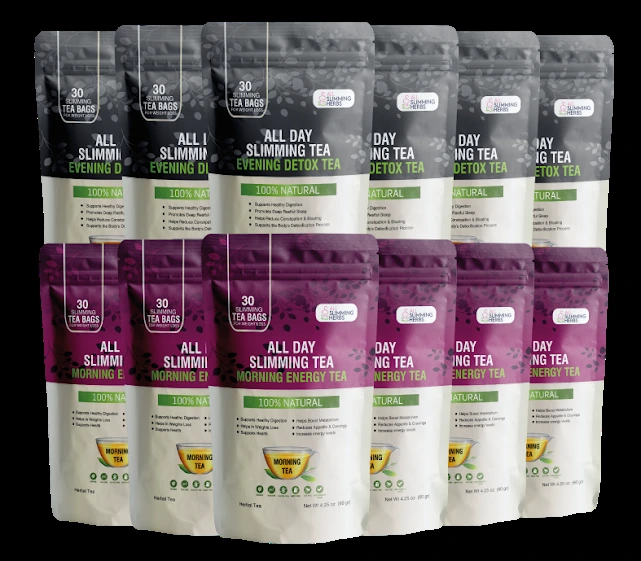
An Easy First Habit to Anchor Onto: All Day Slimming Tea
If step one is "pick one small habit and anchor it to your existing routine," a structured morning-and-evening tea ritual is about as low-friction as it gets — a Morning Energy Tea to pair with your existing wake-up routine, and an Evening Detox Tea to mark the end of the day. It's one small piece of a broader healthy lifestyle, not a replacement for the rest of it.
Or read our full review first.
📝 The One-Page Cheat Sheet
Frequently Asked Questions
The main benefits span physical health (lower disease risk, better weight management, more energy), mental health (improved mood, sharper cognition, better stress resilience), and longevity (longer life expectancy and more years of good quality of life).
Some benefits, like improved sleep or mood, can appear within days to a couple of weeks. Others, like measurable fitness or metabolic improvements, generally take several weeks to a few months of consistency.
Not inherently. The habits with the strongest evidence — sleep, walking, home-cooked simple meals, stress management — cost little to nothing. Cost tends to come from optional extras, not the core fundamentals.
No. Research generally supports gradual, sustainable changes over dramatic all-at-once overhauls, since gradual changes are more likely to actually stick long-term.
Genetics influence your starting point and certain risks, but lifestyle habits still meaningfully affect outcomes within that range for most people. Genetics load the dice; habits still influence how they land.