⚡ Quick Answer
There's no single trick that dramatically "boosts" metabolism. The habits with real, research-backed effects are building muscle through strength training, eating enough protein, sleeping well, managing stress, staying active throughout the day, and — as a smaller, supporting piece — including metabolism-friendly ingredients like caffeine and green tea catechins. Stack enough of these consistently, and the cumulative effect is real, even though no individual habit is dramatic on its own.
📋 What's in this guide
What Metabolism Actually Means
Metabolism is simply the sum of every chemical process your body uses to convert food into energy — including the energy you burn just staying alive (breathing, circulating blood, repairing cells), the energy used digesting food, and the energy spent on physical activity. That baseline "staying alive" number, your basal metabolic rate, quietly accounts for the majority of most people's daily calorie burn — often more than a workout does.
Metabolic rate is shaped by a mix of things you can't control — age, sex, genetics, height — and things you actually can influence: muscle mass, activity level, sleep, and stress. The honest goal isn't a dramatic "metabolism boost" from a single food or habit. It's nudging the things you have real influence over, consistently, for long enough that they add up — the same underlying logic behind most of the broader benefits of a healthy lifestyle.
What Actually Shapes Your Metabolic Rate
Before getting into what you can change, it helps to know what's setting your baseline in the first place:
- Muscle mass: the single biggest lever you can actually influence — more lean tissue means a higher resting burn rate
- Age: metabolic rate declines gradually over time, largely as a downstream effect of age-related muscle loss rather than aging itself
- Sex: men typically carry more muscle mass on average, which usually translates to a somewhat higher basal metabolic rate
- Body size: larger bodies generally require more energy to maintain, independent of composition
- Genetics: baseline metabolic rate varies meaningfully between individuals for reasons that have nothing to do with effort or willpower
- Hormonal factors: thyroid function in particular has an outsized effect — if fatigue, weight changes, or metabolism concerns feel disproportionate to your habits, it's worth ruling out with a doctor rather than assuming it's purely lifestyle
- Dieting history: a history of repeated severe calorie restriction can leave a lingering downward effect on metabolic rate, which is one more reason crash diets tend to backfire long-term
None of these are excuses to ignore the fundamentals — but they do explain why two people can follow the same routine and see different results. Genetics and hormones set the range you're working within; habits determine where you land inside that range.
12 Natural Ways to Support Your Metabolism
Build and maintain muscle mass
Muscle tissue burns more energy at rest than fat tissue does, so the more lean muscle you carry, the higher your baseline calorie burn tends to be. Two or three resistance-training sessions a week is the single most effective long-term lever on this whole list.
Eat enough protein
Digesting protein burns more calories than digesting fat or carbs — the "thermic effect of food." Adequate protein also protects muscle mass during weight loss, which protects your metabolic rate right along with it.
Don't undereat for long stretches
Severe, prolonged calorie restriction can prompt the body to conserve energy by slowing metabolic rate — the opposite of the goal. Moderate, sustainable deficits protect metabolism far better than crash dieting does.
Move throughout the day, not just during workouts
Non-exercise activity — walking, standing, fidgeting, stairs — adds up to a surprisingly large share of daily energy expenditure. A desk-bound day plus one hour of exercise still burns less than a day with movement spread throughout.
Prioritize sleep
Poor sleep disrupts hunger hormones and reduces insulin sensitivity, both working against metabolic health. Most adults need roughly 7–9 hours; consistently getting less undermines nearly every other habit on this list.
Manage chronic stress
Ongoing high cortisol is linked to increased fat storage, especially around the midsection, and it disrupts both sleep and appetite regulation. Stress management is a legitimate metabolic lever, not just wellness-speak.
Stay hydrated
Drinking water causes a small, temporary uptick in calorie burning, and adequate hydration supports normal metabolic processes generally. Modest effect, zero cost, easy to build into a routine.
Include caffeine and catechin-rich teas
Caffeine and green tea catechins have both been studied for a modest effect on energy expenditure and fat oxidation — real, but incremental. Worth including as part of a routine, not relied on as the routine itself.
Add intervals to your cardio
Higher-intensity intervals tend to keep calorie burn elevated after the workout ends — the "afterburn effect." You don't need extreme intensity; a couple of short interval sessions a week adds up.
Eat enough overall
Chronic under-eating, especially paired with high activity, can signal the body to downregulate energy expenditure over time. Consistent, adequate intake keeps metabolism working with you, not against you.
Get natural daylight exposure
Morning light helps regulate circadian rhythm, which in turn influences sleep quality and metabolic hormones. A short walk outside soon after waking is low effort with knock-on benefits for several habits on this list.
Limit alcohol
The body prioritizes metabolizing alcohol over burning fat when both are present, effectively pausing fat oxidation until the alcohol clears. Moderating intake removes a recurring interruption to normal metabolic function.
Habit #8 and #7 above — a caffeine/catechin source plus consistent hydration — are two of the easiest to forget and the easiest to anchor to an existing routine. Hydration and digestion overlap quite a bit too — if bloating is part of what you're dealing with, see our guide on reducing bloating naturally. It's part of why a simple morning-and-evening tea habit tends to actually stick where other changes fall off after a few weeks; we touch on one example of that structure a little further down.
Common Metabolism Myths, Debunked
Myth
Eating small, frequent meals "keeps your metabolism stoked" all day.
Fact
Meal frequency has little measurable effect on total metabolic rate. Total calorie and protein intake across the day matters far more than how many times you eat it.
Myth
Skipping one meal puts your body into "starvation mode" within hours.
Fact
True metabolic adaptation to under-eating happens gradually, over sustained restriction — not from missing a single meal here and there.
Myth
One specific food or drink can dramatically transform your metabolism.
Fact
Individual ingredients — spicy food, cold water, specific teas — generally show small, real effects in research, not dramatic ones. Useful as part of a routine, not a standalone fix.
Myth
Metabolism "slows to a crawl" the moment you turn 30, or 40.
Fact
The decline is real but gradual, and it's driven largely by muscle loss you can actively counteract — not an unstoppable biological clock.
Putting It Into a Realistic Daily Routine
None of the twelve habits above need to happen perfectly, or all at once. A realistic starting routine might look like: a short walk and some daylight exposure in the morning, a protein-forward breakfast, a couple of strength sessions a week, staying reasonably hydrated through the day, and protecting your sleep window at night. Layering in a caffeine or catechin source — coffee, green tea, or a broader herbal blend — is a reasonable, low-effort addition on top of those fundamentals, not a substitute for them.
That's also where a structured morning-and-evening tea habit tends to earn its keep: not as a shortcut around the fundamentals, but as an easy, repeatable trigger that helps a couple of the harder-to-remember habits — hydration, a consistent caffeine source, a wind-down cue at night — actually happen every day instead of falling off after a week.
What a Day Built Around This Actually Looks Like
- Morning: a short walk outside for daylight exposure, followed by a protein-forward breakfast and a caffeine/catechin drink of choice
- Midday: water within reach at your desk, a walk after lunch instead of straight back to sitting
- 2–3x per week: a strength-training session, 30–45 minutes
- Evening: a lighter dinner, a wind-down routine that signals to your body the day is ending, and an earlier bedtime than you think you need
Written out like that, it's not a dramatic transformation — it's a handful of ordinary moments, repeated. That's really the whole point: the people who see real metabolic changes over months aren't the ones who found a secret. They're the ones who made the boring list above boring enough to actually stick to.
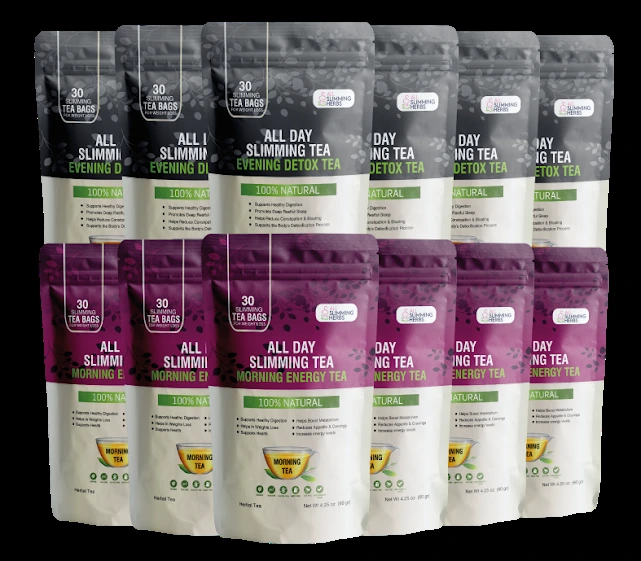
One Way to Build That Routine: All Day Slimming Tea
A two-part herbal tea system — a Morning Energy Tea built around green tea and oolong tea (habit #8 above), and an Evening Detox Tea for digestion and wind-down. It won't replace strength training or sleep, but it's a genuinely easy way to anchor two of the habits on this list to a routine you'll actually keep.
Or read our full review first.
📝 The One-Page Cheat Sheet
Frequently Asked Questions
Building and maintaining muscle mass through strength training has the largest long-term effect, since muscle burns more calories at rest than fat tissue does. Adequate protein and staying active throughout the day also make a meaningful difference.
Drinking water can cause a small, temporary increase in calorie burning, and staying hydrated supports normal metabolic function generally. The effect is modest but it's one of the easiest habits to maintain.
Yes, though it takes more deliberate effort. Metabolic rate naturally declines with age, largely due to gradual muscle loss, but strength training, adequate protein and staying active can meaningfully offset that decline at any age.
Most ingredients marketed for metabolism, such as caffeine and green tea catechins, have modest research support rather than dramatic effects. They can complement the fundamentals above but aren't a substitute for them.
Not meaningfully. Meal frequency has little effect on total metabolic rate — total calorie and protein intake across the day matters more than how many times you eat.
Habits like strength training and better sleep typically take several weeks of consistency before effects are noticeable, since metabolic adaptation is gradual rather than immediate.